

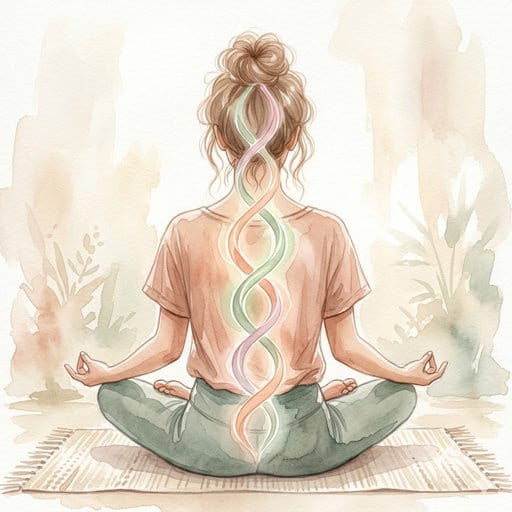
In the traditions of Hatha Yoga and Tantra, the human body is seen as a network of energy paths known as nadis. Old texts describe thousands of these channels, but three of them — Ida, Pingala, and Sushumna — form the core of human vitality.
In somatic education and yoni massage, these channels are not just ideas. They match closely with how our nervous system works and how we manage emotion. Understanding how to balance these forces is key to moving from survival mode into deep, whole-body pleasure.
The Duality of Ida and Pingala
The two side channels reflect the basic dualities of human life.
- Pingala, the solar channel, runs along the right side of the spine. It drives the hot aspects of our nature — action, heat, and outer effort. In nervous system terms, Pingala links to the sympathetic state. When out of balance, it shows up as anger or reactive emotion.
- Ida, the lunar channel on the left, governs cool energy and the impulse of rest and inner life. When Ida runs too strong without balance, it can bring stuck desire or a heavy emotional fog that is hard to shift. Both channels need each other to stay healthy.
Sushumna: The Central Axis of Presence
The central channel, Sushumna, runs through the core of the spine. It is the path of clarity, purity, and calm presence.
Old yoga texts suggest that the aim of practice is to untangle the knots where Ida and Pingala cross — the chakras — and send their energy into this central axis.
From a somatic view, this mirrors the shift of the nervous system into a state of ventral vagal safety. When energy gathers in Sushumna, the body moves past fight-or-flight and freeze. Higher awareness and clear sensation become possible. This is the state where real learning and deep pleasure can take place.
The Role of Energy Flow in Yoni Massage
Yoni massage acts as a practical space for this energy shift. Calming the noise of the side channels is what invites energy into the central channel. The stress of daily life comes from Pingala. Emotional weight comes from Ida.
For most people, the early movement of energy is subtle. The depth of the session depends on how far this energy can rise without hitting somatic blocks.
These blocks are often more than emotional — the barriers created by abdominal scars can physically divert rising energy and need specific work on the surrounding fascia.
Mapping the Ascent of Sensation
The effects of a session vary based on how high the rising energy reaches. Energy that stays at the pelvic floor may create an urge to pull back.
Rising into the lower belly shows as deep visceral pleasure. As the flow moves to the solar plexus, it can boost personal drive and inner strength.
Movement into the heart center often brings a somatic release — tears or a wave of emotion — as armor softens.
Higher movement into the throat, brow, or crown can bring creative insight and a deep sense of connection that some describe as oneness with all things.
Chakras as Neural Hubs of Experience
Where the three channels meet, they form the energy centers known as chakras. In body terms, these centers link to major nerve plexuses and glands along the spine.
A block in one neural hub can stop sensation from rising during yoni massage. By working with the physical tension around these crossings, we help clear the path for life force to move toward higher centers of awareness.
This blend of old map and modern anatomy allows for a more focused and effective practice. Each session builds on the one before.
The Physiology of Energetic Balance
Balancing the solar and lunar channels is not just a spiritual aim — it is a real biological need. A body stuck in Pingala mode stays on high alert and cannot reach deep rest. One dominated by Ida may drift into low drive or a sense of fog.
Yoni massage helps reset this balance by giving the nervous system a safe space to move between arousal and rest. This works best when a woman chooses to stop the internal drive to perform and lets her inner systems settle into a calm, clear state.
That shift into the central channel turns effort into presence, and defense into open awareness.
Integration with Daily Practice
The depth of yoni massage grows with daily habits. Practices like yoga and breathwork help thin the side channels and prepare the central vessel for higher energy loads.
Regular somatic movement builds the ability to stay present with strong sensations that arise during a session. This keeps energy from getting stuck in lower centers and allows it to flow freely.
Both old and modern somatic texts point to this kind of daily work as the base for real creative and spiritual growth. Small daily steps make big sessions possible.
Grounding the Rising Vitality
As energy moves up through Sushumna, staying grounded is vital. Without a strong link to the physical body and the earth, high-energy states can feel too much or hard to place.
In somatic work, upward movement must always be balanced by a downward sense of stability.
This dual focus helps make sure that what is gained during a session — insight, ease, pleasure — becomes part of daily life. Otherwise, even the deepest sessions fade quickly without leaving a trace. Grounding is what makes the work last.
From Theory to Embodied Experience
Linking old nadi theory with modern bodywork allows for a fuller approach to pelvic health. This work is not just about physical tissue — it reaches the very currents of life force that shape emotional and spiritual wellbeing.
By working with the balance between solar and lunar energy, yoni massage becomes a tool for self-discovery and inner alignment.
If you want to explore this in a safe and structured setting, the online yoni massage course offers step-by-step somatic guidance for practitioners. Every journey toward the center begins with the breath.