

The human body contains a complex map of sensory potential that often remains unexplored in modern life. Among the most significant yet overlooked areas is the perineum, located between the vaginal opening and the anus.
This delicate space houses the Perineal Sponge, a structure that acts as a bridge between our survival instincts and our capacity for deep somatic joy. Understanding the anatomy and function of this region is essential for anyone looking to deepen their connection to their body.
This practical guide offers insights for those seeking to transform their physical awareness through mindful touch. By bringing conscious attention to this region, we can begin to soften the layers of tension that accumulate there over a lifetime.
The Anatomical Location of the Perineal Sponge
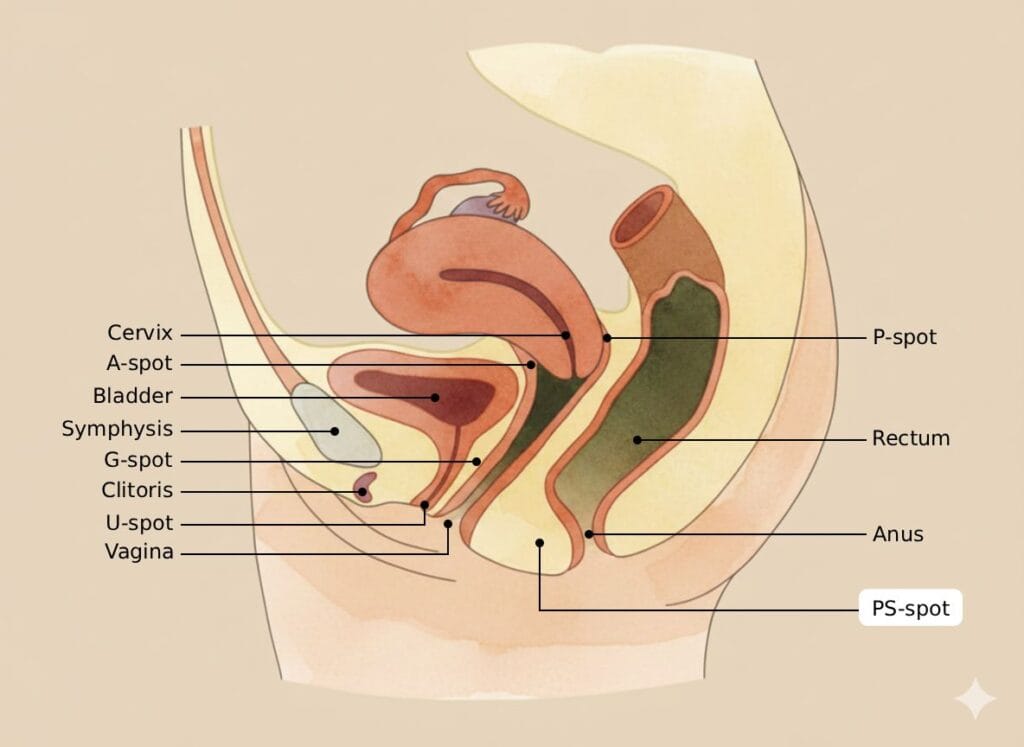
The Perineal Sponge, or PS-Spot, is a cushion of erectile, porous tissue located within the perineum. During periods of arousal, this tissue engorges with blood, becoming firmer and much more sensitive to touch. It sits just behind the posterior vaginal wall and supports the entire pelvic floor.
Unlike the sharp intensity of clitoral stimulation, the PS-Spot offers a rich, grounding sensation that resonates through the pelvis. This sponge-like tissue is highly vascular and responds beautifully to warmth and rhythmic movement during a yoni massage session. Understanding its responsiveness is the first step toward reclaiming pelvic sensitivity and vitality.
The Perineal Body as the Structural Anchor
While the PS-Spot provides the tissue for sensation, the perineal body serves as the essential structural anchor. This is a central tendon where several major pelvic floor muscles converge, providing stability to the organs and acting as a pivot for muscular movement. Because so many fibers meet at this single spot, it often becomes a primary site for chronic tension. The perineal body is frequently described as an energetic gateway because of its proximity to the pelvic nervous system branches that govern relaxation. Softening this structural center allows the PS-Spot to expand and respond more freely to somatic stimuli.
The Interconnection Between Pleasure and Stability
The relationship between the PS-Spot and the perineal body illustrates the balance between pleasure and stability. The sponge provides the capacity for expansion, while the perineal body provides the necessary support.
Without a healthy structural foundation, the sensations in the sponge may feel ungrounded or overwhelming. Conversely, without the softness of the erectile tissue, the pelvic structure can become overly rigid.
Together, they create a unified system that supports both physical health and emotional expression. This balance is key to understanding every part of the pelvic landscape which honors the diversity of our internal geography.
How Chronic Stress Creates Pelvic Armoring
The perineum is biologically programmed to contract during times of perceived danger. This reflex is a primitive survival mechanism designed to protect our most vulnerable anatomy.
Over time, if a person experiences chronic stress, this contraction can become a permanent state. The muscles around the perineal body and the PS-Spot remain on guard, leading to a loss of sensitivity or numbness.
This physical defense is often called armoring. Softening these tissues sends a powerful signal to the nervous system that it is finally safe to relax and open up to the world in a meaningful way.
The Somatic Mechanics of the Pinching and Rolling Gesture
One of the most effective ways to interact with the PS-Spot is through a specific manual method. This involves using the thumb and forefinger of one hand to gently “salt” the tissues. Place the index finger just inside the vaginal opening and the thumb on the external skin of the perineum. Engaging in this process of inviting the body back into a state of fluid sensitivity helps to break up micro-tension in the fascia. The goal is a subtle shifting of the tissue layers rather than heavy pressure, encouraging blood flow into the sponge and waking up dormant nerves.
Phase One: Awakening the Left Side of the Sponge
The first stage of the practice focuses on the left side of the perineal region. By shifting the fingers slightly to the left of the midline, the practitioner targets the specific fibers on that side. It is common to find that one side of the body holds more tension than the other.
Spend several minutes in this area, using the salting motion to invite the tissue to expand. This lateral work helps to balance the pelvic floor before moving toward the center. It builds trust and allows the nervous system to acclimate to the touch in a non-threatening way.
Phase Two: Integrating the Right Side for Balance
After the left side feels responsive, the fingers are moved across the midline to the right flank. The same rolling motion is applied here to look for specific points of resistance or knots.
Balancing both sides is crucial because the pelvic floor functions as a symmetrical unit. If one side remains tight, the structural center will remain under uneven strain. This phase ensures that the entire cushion of the PS-Spot is fully engaged.
Once both sides feel equally awake, the practitioner can transition to the core of the perineum for deeper work.
Phase Three: Central Activation and Emotional Release
The final phase brings the fingers to the exact center of the perineum, directly over the perineal body. This is often the most intense part of the process because it is where the most significant congestion resides.
Using the same rolling gesture, the practitioner works on the central hub, inviting the muscles to release their grip. Because this is the anchor, the sensations here can feel very deep and connected to the spine. Massaging this center often triggers internal heat or a subtle buzzing. This work unlocks the potential of the PS-Spot, allowing pleasure to radiate outward from the base.
Navigating Emotional and Somatic Release
As the tension in the perineal body melts, it is very common for the body to release stored emotions. These might manifest as sudden waves of heat, shaking, or unexpected memories of past events. This is a natural part of the healing process and a sign that the yoni massage is reaching the cellular level. It is vital to meet these releases with compassion and steady breathing. Encouraging the receiver to exhale fully helps to move the energy out of the pelvis. Clearing this survival energy allows higher states of bliss to arise naturally within the system.
Integrating Pelvic Awareness into Daily Somatic Practice
The benefits of working with the PS-Spot extend far beyond the massage session. Once these areas have been softened, you may notice a greater sense of groundedness in daily life.
This somatic work emphasizes that the pelvis is a center of vitality. This increased awareness helps to prevent the re-accumulation of tension in response to stress.
Regularly engaging with this area helps to cultivate a more resilient nervous system. Reclaiming this part of the self is a powerful way to honor the body’s wisdom and capacity for lasting joy and somatic pleasure.