

Ernst Gräfenberg left a clear mark on the science of female sexuality. Few people expected a quiet German doctor to change how the world thinks about the female body.
His life took him through Nazi prisons and across oceans. Along the way, his research gave modern practitioners a clear language for what many had sensed but never named.
For those who study yoni massage today, his work is not old history. It is a living and useful foundation that still shapes how we think about female anatomy.
Early Life and Medical Education
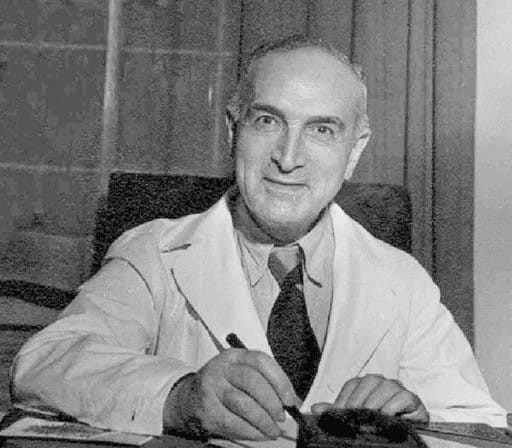
Ernst Gräfenberg was born on September 26, 1881, in Adelebsen — a small town in Lower Saxony, Germany. He studied medicine at several German schools and got his doctorate in 1905.
Early on, he was drawn to eye care and spent time working in that area. Later, he moved fully into women’s health and gynecology.
As a doctor, he was careful and curious. He looked closely at what the body showed him, wrote down what he found, and trusted his direct observations over received ideas. This habit defined his whole career and set the tone for everything that came after.
Berlin Years and the Intrauterine Ring
By the 1920s, Gräfenberg was living and working in Berlin. There he built a name as a skilled gynecologist and active researcher.
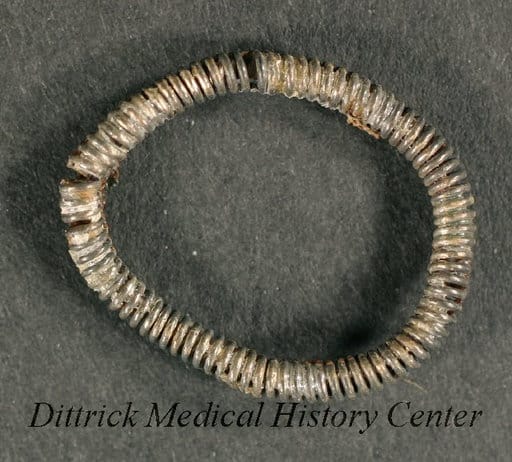
He created one of the first intrauterine devices — a small silver ring used to prevent pregnancy. People came to call it the Gräfenberg ring. The reaction from the medical world was cold. Many doctors rejected it or paid no attention to it at all.
Even so, he kept going. Berlin in those years was a city in flux, full of change and tension. Through all of it, he worked with focus and steady purpose. These years were his most creative, and they would not last long.
Dittrick Medical History Center
dittrick.pastperfectonline.com
Persecution, Arrest, and Prison
When the National Socialists took power in 1933, the world changed fast for Jewish doctors across Germany. Gräfenberg was pushed out of his work, his clinic, and his daily life.
In 1937, the authorities arrested him on charges of currency smuggling. Many historians see these charges as political — a way to harm people the regime wanted gone. He spent real time in prison under the Nazi state.
Margaret Sanger, the American birth control activist, worked hard to win his release. Thanks to her efforts, Gräfenberg was eventually freed. The experience took years from his life and made any return to Germany impossible.
Escape to the United States
Gräfenberg came to the United States in 1940. He moved to New York City and joined the staff of the Margaret Sanger Research Bureau.
Starting over in a new land and a new language was not easy or fast. But New York gave him something he had lost: a place where his ideas could be heard. He found colleagues who took his thinking seriously and gave him room to work.
Through the 1940s, he built slowly toward the paper that would carry his name far into the future and change his field for good.
The Role of the Urethra in Female Orgasm
In 1950, Gräfenberg published his key paper, “The Role of the Urethra in Female Orgasm,” in the International Journal of Sexology. Behind it lay many years of careful clinical work and close observation.
He wrote about a zone along the front wall of the vagina, near the urethra, that showed clear erotic response in many women. Fluid released during female orgasm was also linked by him to the glands near the urethra.
His writing was grounded and plain. No guessing or wild claims appeared in his text — only direct description of what he had seen and measured in a clinical setting.
The Famous Quote
The most quoted line from that 1950 paper is short and sure.
Gräfenberg wrote that “An erotic zone always could be demonstrated on the anterior wall of the vagina along the course of the urethra”.
He did not say it worked the same way for all. No claim of equal results across all cases appeared in his text. What he said was more precise: the zone is there, and its presence is steady.
That one sentence moved the whole debate forward. Instead of asking whether such a zone existed at all, researchers could now ask how it worked and why responses varied so much from person to person. That shift in focus was a real gift to the field.
wikipedia.org
The Gräfenberg Spot — How the Name Was Born
Gräfenberg never used the term G-spot himself. That name came thirty years after his paper, in 1981, from six experts led by Frank Addiego. They chose it as a direct tribute to his work.
Their own research built on what he had written and observed. That name was a form of scientific respect — a way of saying that he had found something real, even when the field was not ready to hear it.
What the 1981 female ejaculation research records shows is a straight line back to what Gräfenberg first described in 1950.
Legacy in Science and Somatic Practice
Gräfenberg’s reach went beyond the zone that now carries his name. By studying female sexual response with care and honesty, he helped open a space where such work could be done at all.
His place belongs in the long line of people who refused to treat ignorance about the female body as normal or acceptable.
Researchers who came after him used his anatomical maps to trace the links between the urethra, the front vaginal wall, and the glandular tissue tied to female ejaculation. Each step forward in that work owes something to what he chose to look at and write down.
Why His Work Still Matters for Yoni Massage Today
Knowing what Gräfenberg found is not just about honoring old science. His clear account of the front vaginal wall as a zone of deep sensitivity has direct meaning for somatic practice right now.
In yoni massage, a real grasp of this region — its structure, its variation between people, and its ties to the wider pelvic system — shapes how touch is understood and how it is offered.
Gräfenberg did not know the words yoni massage. Yet he spent his whole career doing what every honest somatic practitioner tries to do: watching with care, writing with truth, and refusing to ignore what the body clearly showed him.