
History hides deep stories about how we view the human body. Long ago, early thinkers spent their lives studying how women react to touch.
Vatsyayana is a famous figure in this exact field. He lived in ancient India during the second or third century. Many people know him only as the writer of the Kama Sutra. But his real work was much deeper than modern myths claim.
He was a pioneer of human science. He watched how the human body and mind work together. By reading his early texts, we find the roots of modern somatic anatomy. We study this deep history to apply it safely in yoni massage today. His careful study changed human touch.
The Life and Times of Vatsyayana
Very few facts exist about the life of this ancient thinker. His full name, Vatsyayana Mallanaga, is found at the very end of his famous book. Because of this, he is widely accepted as the true author.
Different experts suggest he lived anywhere from the first to the sixth century. He likely stayed in the large city of Pataliputra.
He openly wrote that his work simply gathered the wisdom of many older, lost texts. Surprisingly for a man who wrote deeply about human pleasure, he called himself a devoted religious student in Benares. He claimed to spend his days thinking about the divine. He stated that he wrote his famous text only after a long period of deep meditation.
Beyond the Myths of the Kama Sutra
When people hear the name of his famous book, they usually think of physical poses. This is a big and sad mistake.
To truly know its purpose, we must look at the title itself. The word “Kama” translates to human desire, deep pleasure, or love. The word “Sutra” means a thread, a guiding rule, or a clear manual. Brought together, the title translates as the “Manual of Love” or the “Thread of Desire”. However, the most common translation used today is the “Principles of Love”.
The Kama Sutra is a deep work – actually 7 books and 67 chapters – about human minds and strict social rules. It teaches the fine art of living well every day.
Only one book of the text talks about direct physical acts. This exact part became highly popular on the modern internet. Because of this wide spread, the work is now falsely known as just a book of physical poses.
The rest of the books covers very different social rules. It teaches a man exactly how to find a good wife. It lists the clear daily duties of a loyal wife. It even explores the complex social rules regarding the wives of other men and info about courtesans. Finally, it shares unusual occult practices designed to make a person highly attractive to others.
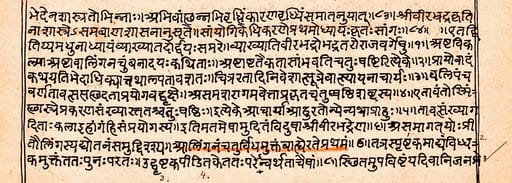
wikipedia.org
The Early Study of Female Anatomy
In the past, many cultures ignored what women felt. This wise scholar did not do that. He paid very close attention to the female body and its needs. He did not see it as a simple object for male pleasure. Instead, he saw a complex living system.
He knew it required deep study and massive human respect. He mapped out the sensitive zones of the body with great care. He noted how different areas reacted to soft touch and firm pressure.
This brilliant early work was a vital step forward. It shows the deep connection between ancient energy and the brain map that we study today.
Classifying Somatic Responses
We can only assume that he studied physical touch to help people gain mastery over their own senses. He even used a real story of a king who harmed his wife in a fit of passion to clearly warn his readers against losing physical control.
One of his best historical achievements was sorting deep physical responses. He clearly saw that no two bodies are exactly the same.
He made a detailed system to group women by their unique physical nature. He carefully noted their daily moods and natural habits. He watched how quickly or slowly different bodies reached a high state of arousal.
This ancient book proves he fully understood human bio-individuality. He knew that a strict, one-size-fits-all approach to human touch would fail. A truly good partner had to learn over time. They had to slowly read the unique physical language of the specific person right in front of them.
The Essential Art of the Prelude
He knew that different bodies always react at very different speeds. Because of this, he wrote a lot about the fine art of preparation.
He strongly believed that a long, slow prelude was needed for true success. Rushing directly into deep contact is always a bad idea. The human body needs a lot of quiet time to wake up. It must feel completely safe and secure before opening.
This slow build-up lets the human nervous system fully relax. It allows the deep pelvic tissues to soften naturally over time. He taught that slow preparation is the only safe way to awaken the body.
Observation and Adjustment in Yoni Massage
This ancient wisdom about slow pacing remains a core rule today. It is highly vital in the modern practice of a yoni massage.
Just as the wise author noted, different women truly have very different temperaments. They really do have completely different speeds of deep physical arousal. Because of this exact fact, a long and careful prelude is absolutely required.
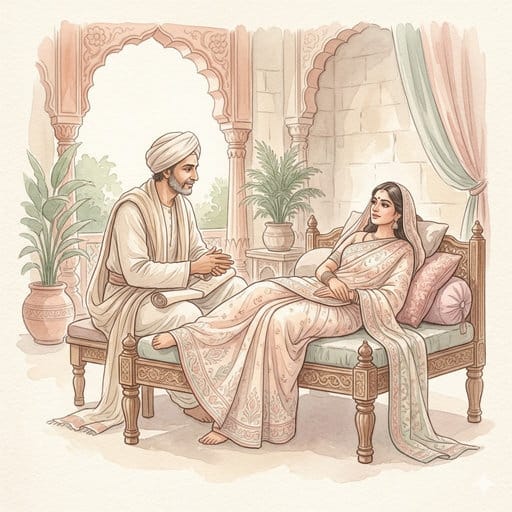
A skilled person must always act as a deep listener. They must closely watch the subtle reactions of the woman in real time. If her breathing changes, the guide must instantly adjust their pace or pressure. This cycle keeps the body open.
The Psychology of Touch and Consent
The famous ancient text also dives into the deep psychology of safe touch. The author fully understood that physical moves are useless without a clear emotional link.
He wrote about the huge importance of reading subtle, non-verbal signals. A sharp intake of breath or a slight pull away carries deep meaning. Paying close attention to these quiet signs builds real human trust.
He did not use our exact modern words for clear personal boundaries. However, his ancient teachings are entirely based on deep mutual respect. He knew that the human mind must say a clear yes before the physical body can ever truly open up.
Bridging Ancient Wisdom with Modern Somatics
When we read these old texts today, we easily see strong links to modern science. His early notes on reading subtle tissue tension match what we now know.
They fit perfectly with modern facts about the human nervous system. His intense focus on very slow pacing aligns with clinical ways to calm human stress.
Today, we actively use complex anatomy books to explain these same old ideas. Looking deeply at the past gives us a wider view of our modern work. We clearly see that the complex human body has always needed high safety. It needs slow time and deep attention to truly thrive.
Conclusion: The Legacy of Vatsyayana
The historical legacy of this wise scholar goes far beyond modern myths. He was a great pioneer who carefully mapped the early landscape of female physical responses. He beautifully taught the vital importance of slow preparation and careful visual observation.
By doing this, he firmly laid the deep groundwork for early somatic awareness. His profound ancient insights constantly remind us that true physical connection is a complex art.
For anyone exploring what this practice is used for in somatic education, his ancient words still offer massive value today. He taught the world that the female body deserves the highest respect.