

Touch is much more than skin contact; it is a complex conversation between your nerves and your brain. In the practice of yoni massage, we focus on moving beyond the surface to activate deeper layers of sensation. This approach shifts the goal from simple stimulation to a profound state of internal awareness. By understanding how the body processes physical input, we can use touch as a tool for safety and regulation. This scientific view helps us appreciate why specific types of pressure create such a strong impact on our well-being.
The Body’s Internal GPS
Proprioception is often called our “sixth sense”. The name comes from “proprius,” meaning “one’s own,” and “perception,” meaning “awareness”. It is the biological system that tells your brain where your limbs are without you having to look at them. When we experience deep touch, it is like turning on a light in a dark room. This clarity helps the nervous system feel more grounded and secure.
Meet the Deep Pressure Sensors
Deep beneath the surface of the skin, the body has specialized cells designed to detect heavy contact. These are not the same receptors that feel a light breeze or a tickle. They are built to respond to the weight and substance of a hand. In somatic work, we intentionally target these sensors to move the focus away from the busy mind and into the solid reality of the body.
Pacinian Corpuscles: Detecting Deep Pressure and Vibration
Pacinian corpuscles are the receptors responsible for sensing deep pressure and fast vibrations. They live deep in the tissues and require a certain amount of force to activate. When these sensors are triggered, they send signals that can help lower heart rate and calm the mind. This is why a steady, firm presence during a session often feels more relaxing than light, superficial movements.
Ruffini Endings and the Sensation of Skin Stretch
Ruffini endings are another type of sensor that responds to the stretching of the skin and tissues. These receptors are slow to react, meaning they stay active as long as the stretch is maintained. This creates a sense of continuous connection and helps the brain map the shape of the body. Slow, intentional movements allow these receptors to communicate a message of ease and length to the entire system.
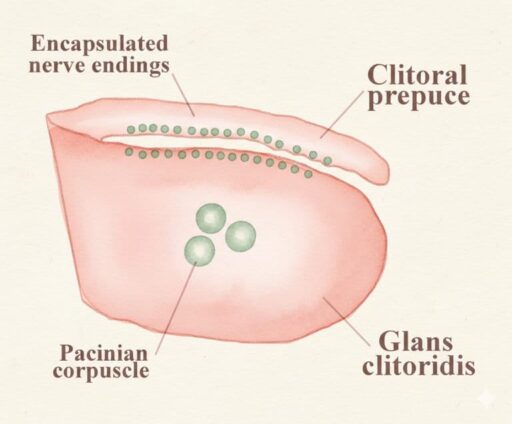
wikimedia.org / Author Esseh
Why Slow Pacing is a Biological Necessity
There is a biological reason why speed kills sensitivity. If touch moves too quickly, the deep receptors do not have enough time to adapt and send clear signals. The nervous system may even perceive fast, unpredictable movement as a threat. By slowing down, we allow the vascular and nervous systems to align, making the internal anatomy of pleasure much more accessible.
Relaxing the Pelvic Armor
Chronic stress often leads to “muscle armor,” where the body holds tension as a form of protection. Light touch is often not enough to signal these deep muscles to let go. However, activation of deep pressure sensors tells the brain that the environment is safe. This biological “green light” allows the pelvic floor to release old patterns of tension and return to a natural state of rest.
Proprioceptive Awareness as a Tool for Consent
When you have a clear sense of your proprioception, you can better feel where you end and the world begins. Deep pressure helps define these physical limits in a way that words cannot. This internal clarity is essential for stating a “no” or a “yes” with confidence. A body that feels its own boundaries is a body that can safely explore the connection between the vagus nerve and arousal without feeling overwhelmed.
Enhancing the Quality of Touch through Scientific Insight
To work effectively with these receptors, the quality of touch must be grounded and attentive. This means using the weight of the palm rather than just the fingertips. It involves staying in one place long enough for the tissues to respond. Knowledge of these sensors transforms a simple massage into a precise educational tool for self-discovery and somatic regulation.
Conclusion: From Mechanical Touch to Somatic Presence
Understanding the science of Pacinian and Ruffini receptors changes how we view intimacy. It moves us away from chasing results and toward a deep respect for the body’s natural pace. Yoni massage becomes a laboratory for experiencing these biological truths in real time. When we honor the way our nerves actually work, we open the door to a more resilient and connected version of ourselves.