

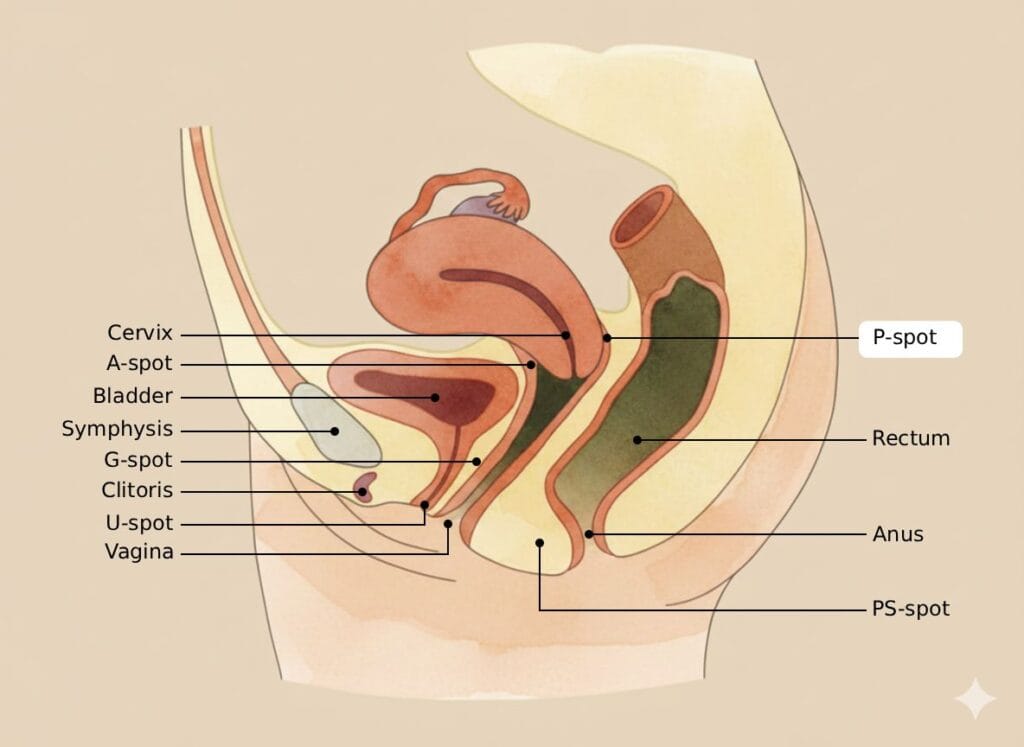
The human body contains hidden layers of sensitivity. These layers often require extreme trust and patience to reveal. Among these is the Posterior Fornix, known as the P-Spot. It is located at the very end of the vaginal canal, behind the cervix. In somatic circles, it is often called the “deep spot.” For many people, this region stays in a dormant or “sleeping” state. Standard physical activity rarely touches it. However, with conscious intent, it becomes a gateway to emotional healing and intense physical response. This guide explores the unique anatomy and the stages of awakening this deep erogenous zone.
The Anatomy of the Posterior Fornix
The P-Spot is in the deepest part of the pelvic basin. Here, the vaginal wall creates a small pocket behind the cervix. Anatomically, this area is close to the rectum and the Douglas space. This makes it a highly sensitive junction for pelvic nerves. Unlike the more accessible G-spot, the P-spot is tucked away. It serves as a structural boundary within the pelvic floor. It is richly filled with nerves from the pelvic plexus. These nerves connect directly to the parasympathetic nervous system. This explains why stimulation here feels holistic rather than localized.
The Four Stages of P-Spot Sensitivity
In somatic bodywork, P-Spot sensitivity usually develops through four distinct stages. These stages are rarely skipped. They often require several sessions to navigate fully:
Stage 1: Initial contact may feel uncomfortable or even painful. The body’s protective “armoring” often reacts to the depth of the touch.
Stage 2: As the tissues soften, the touch often triggers an emotional release. Suppressed memories or situations may surface through tears, shaking, or a sense of catharsis.
Stage 3: Once the emotional layer is cleared, the physical sensations change. They move from neutral to genuinely pleasant.
Stage 4: With total trust, stimulation leads to a profound, deep-tissue orgasmic response.
Characteristics of the Deep P-Spot Orgasm
An orgasm from the Posterior Fornix is a unique somatic experience. It involves intense, deep muscle contractions. These resonate throughout the entire pelvic floor. These are the most profound type of internal movements the body can feel. Such an event usually lasts between one and two minutes. This is much longer than a typical peak. Following this release, the body enters a state of extreme relaxation. It is common to feel no desire for more stimulation. The nervous system has reached a state of total peace.
If the practitioner does not wish to end the session at this point, they must take care not to reach this final peak. Instead, the goal is to keep the recipient riding the waves of arousal. This involves managing the intensity so that the energy builds and recedes without crashing into a terminal release. To master this flow, the practitioner should focus on managing the waves of arousal and somatic rhythms, allowing the body to stay in a high state of activation for a longer duration. This approach keeps the somatic experience alive and prevents the premature onset of the refractory period.
Preparing the Nervous System for Depth
The P-Spot is located very deep within the body. Therefore, the nervous system must be carefully prepared. Any sense of rush will cause the deep pelvic muscles to contract. This makes the area impossible to reach. It is essential to ensure that the nervous system is not being pushed into urgency during the start of the session. Building a container of safety allows the cervix to lift. This creates the space necessary for a comfortable experience. Without this “green light,” the P-spot remains a site of defense rather than pleasure.
Manual Technique: Navigating to the Deep Spot
To reach the P-Spot, place your hand horizontally with the palm facing down. Using one or two fingers, slowly follow the lower wall of the vagina. Move as deep as possible until the fingers reach the back wall. From this point, lift the fingers slightly upward. You are looking for the junction between two textures. One is the soft tissue of the back wall, which feels like the inside of a cheek. The other is the firmer structure of the cervix, which feels like the tip of a nose. Use short “come hither” movements with the fingertips to explore this pocket.
Adjusting the Angle for Better Access
Sometimes the P-Spot is too deep to reach with the fingers. A change in positioning can help. If the recipient feels a high level of trust, the practitioner can gently bring her knees toward her chest. Her feet can rest on the practitioner’s shoulders. This change in the pelvic angle brings the posterior fornix closer to the vaginal opening. In this position, the short “come hither” motion becomes much more effective. However, if the recipient appears tense, avoid this advanced position. It is better to return to more familiar areas of exploration.
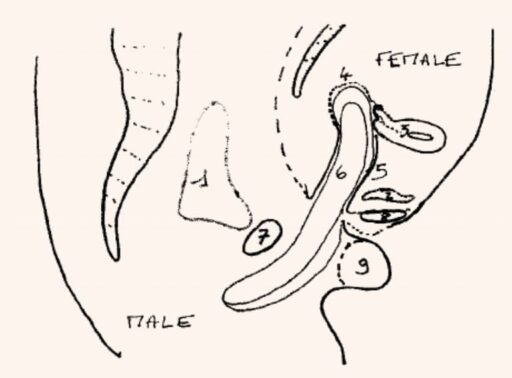
(1) Male bladder; (2) Female bladder; (3) Uterus; (4) Posterior fornix; (5) Anterior vaginal wall; (6) Erect part of the penis inside vagina; (7)Male pubis, (8) Female pubis; (9) Testis.
From article "Magnetic Resonance Imaging (MRI) of Sexual Intercourse: Second Experience in Missionary Position and Initial Experience in Posterior Position".
researchgate.net
When to Step Back and Honor the Body
Respecting boundaries is the most important rule. If the depth feels overwhelming, the practitioner should pause. Forcing a connection to the deep spot can lead to more armoring. If the depth remains “closed,” it is better to move to other erogenous zones. This approach involves exploring a diversity of pelvic sensory responses to find what feels safe in the moment. Honoring a “no” at this depth builds the trust required for a future “yes.” This patience is what eventually allows the tissues to open naturally.
The Phenomenon of Deep Transsudation
Stimulating the P-Spot often activates a unique form of lubrication. This is known as deep transsudation. As the body relaxes, the blood vessels in the deep pelvic tissues dilate. This causes a warm, watery fluid to filter through the vaginal walls. This creates a “flood” of moisture. This same type of deep wetting also happens during the massage of the A-spot (Anterior Fornix). It is a clear sign that the body has moved out of a defensive state. This fluid provides the glide for continued deep-tissue work and enhances the somatic connection.
Somatic Integration and Post-Session Care
The intensity of P-Spot work requires time for integration. The experience can be both emotionally and physically big. The recipient needs time to recalibrate. It is common to feel a sense of lightness in the following days. This is often accompanied by emotional clarity. Resting and staying hydrated helps the nervous system to settle. This integration process ensures that the releases become a permanent part of the person’s somatic map. This leads to a more open and resilient way of being in the world.
Conclusion: Returning to Natural Flow
Working with the P-Spot is a journey of returning to your natural state. By peeling back protective layers, we reclaim a part of ourselves. This process does more than just enhance pleasure. It restores emotional depth and structural integrity to the pelvis. Through patience and somatic awareness, the deepest part of the yoni transforms. It moves from a place of hidden tension into a source of profound wisdom. Reclaiming the P-spot is a powerful way to celebrate the body’s capacity for deep, lasting peace and somatic freedom.