

Most people believe that all our thoughts and feelings come from the head. However, modern science shows that we have a “second brain” located in our gut. This is the Enteric Nervous System (ENS). It plays a huge role in how we experience touch, safety, and pleasure. When we talk about deep somatic sensitivity, we must look at the belly. The connection between the gut and the pelvic floor is the key to unlocking true physical presence.
Where Does the Name Come From?
Before we dive deep, let’s look at the word “enteric” (en-ter-ik). It comes from the ancient Greek word enteron, which simply means “intestine” or “gut.” In science, we use this term for everything related to your digestive tract. So, when we say “Enteric Nervous System,” we are literally talking about the complex “web of nerves” that lives inside your belly.
What is the Enteric Nervous System (ENS)?
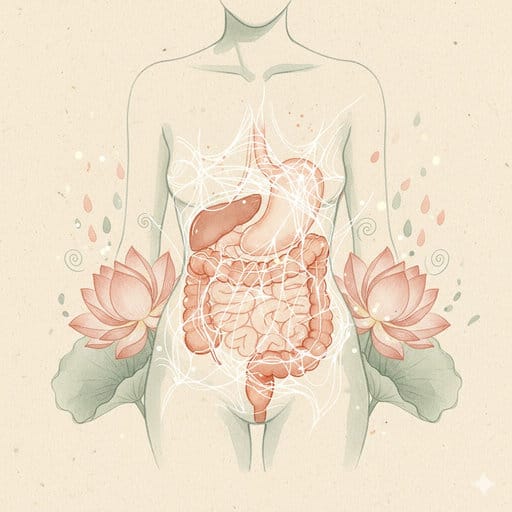
The ENS is a complex network of millions of neurons embedded in the walls of the gastrointestinal tract. It stretches all the way from the esophagus to the anus. While it is connected to the brain in your head, it is capable of working entirely on its own. This system is responsible for much more than just digesting food; it is a sophisticated sensory organ that monitors the internal environment of your body every second.
Independence of the Second Brain
Unlike other parts of your nervous system, the ENS is sovereign. It can manage complex reflexes and sensory data without waiting for instructions from the head. This independence is why we often feel things in our “gut” before we can explain them with words. In the context of bodywork, this means your belly is constantly “reading” the environment and the quality of touch, even if your mind is distracted or thinking about something else.
The Serotonin Factory
An amazing fact about the ENS is that it produces more than 90% of the body’s serotonin. Serotonin is often called the “happy hormone” because it regulates mood and emotional balance. Because so much of this chemistry is made in the gut, the health of your ENS directly affects your ability to feel joy and pleasure. If the gut is tight or stressed, it becomes much harder for the body to enter a state of blissful receptivity.
Physiological Intuition
Have you ever felt “butterflies in your stomach” or a strange “gut feeling”? These are not just metaphors; they are real physical signals. The ENS communicates with the brain via the vagus nerve to report on your state of safety. If the ENS senses a threat, it sends a signal that can make you feel anxious or guarded. Learning to recognize these signals is a vital part of developing somatic intelligence and trusting your body’s wisdom.
Choosing a Practitioner: The Gut Response
When it comes to intimate somatic work, safety is everything. Your “second brain” is your best tool for selecting a massage professional to ensure a sense of safety and comfort. Before a session, pay attention to your belly. If you feel a sense of lightness or “good” butterflies, your ENS is giving you a green light. If you feel a sharp tightening or a heavy, “off” feeling, your body is telling you that this person or environment is not right for you.
The Belly-Pelvis Connection
The digestive system and the pelvic floor are neighbors. They share neural pathways and are separated by very little space. When the gut is in a state of “fight or flight,” the muscles of the pelvic floor usually tighten as well. You cannot have a fully relaxed and receptive yoni if the tissues above it are frozen in stress. To open the body, we must help the myofascial layers to release tension and return to their natural, fluid state. True sensitivity requires a relaxation that starts in the center of the body and flows downward.
The Art of Diaphragmatic Breathing
One of the best ways to soothe the ENS during a session is through deep, diaphragmatic breathing. When you breathe into your belly, you physically massage the enteric nerves and signal to the system that it is safe to relax. Many women unconsciously hold their breath or keep their stomach tight to feel “controlled.” However, letting the belly go soft is the only way to allow the nervous system to switch from protection mode to pleasure mode.
The Practitioner’s Awareness
A skilled practitioner knows that the belly is a mirror of the client’s internal state. During a session, the practitioner should monitor the movement of the client’s abdomen. If the breathing becomes shallow or the belly becomes hard, it is a sign that the ENS is feeling overwhelmed. The practitioner’s role is to wait, perhaps offer a gentle reminder to breathe, and ensure the belly softens before continuing with deeper work.
Conclusion
Understanding the Enteric Nervous System changes the way we look at intimacy. It shows us that our emotional and intuitive reactions have a deep physical foundation. When your “two brains” work together in harmony, you can experience a level of sensitivity that is both grounded and expansive. If you want to learn how to work with these systems professionally, you are invited to enroll in our yoni practitioner course. This training helps you master the science of safety and the art of touch.