
Ancient Greece is the cradle of medicine.
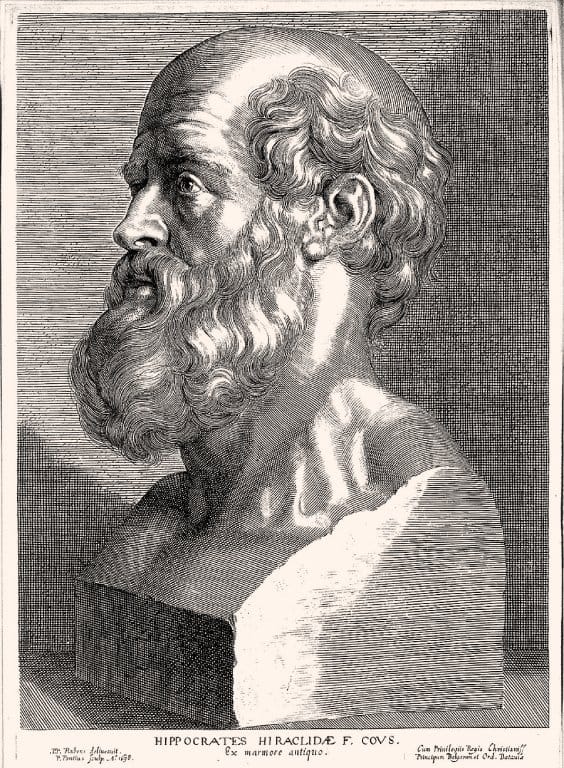
Hippocrates was one of the first to study the female body through a purely medical lens. He moved away from magic and focused on how fluids move inside us. This shift was a huge step for human health. Even thousands of years ago, manual touch was seen as a key to health and balance.
Today, we still see the value of this ancient wisdom. A modern yoni massage shares many of these early goals. It focuses on the physical release of deep tension. By looking back at history, we can better understand our bodies now. Science and touch have always worked together to heal.
Hippocrates and the Theory of Humors
Hippocrates lived in Ancient Greece around 400 BC. He spent much of his life on the island of Kos. Today, he is most famous for the Hippocratic Oath, a moral guide that doctors still follow.
Hippocrates built his medical ideas on a simple concept. He believed the human body is full of different fluids. He called these vital fluids “humors”. The body is healthy when these fluids flow freely. If a fluid stops moving, it creates a bad block. This block leads to physical pain and sickness.
This idea applied to both men and women. But the female body had its own unique fluid needs, a concept that deeply shaped the female seed theory in ancient anatomy. The ancient doctors watched how the body reacted to touch and rest. They saw that a relaxed body has a better fluid flow. Keeping fluids in motion was the main goal of early medicine.
The Concept of the Female Seed
Ancient doctors had a specific view of the female body. They believed that women also produce a kind of seed. This seed was a mix of vital fluids created during sexual arousal.
They thought this female seed needed to leave the body. If it did not, it would cause major health problems. They saw the release of these fluids as a natural and healthy act.
It was not just about pleasure for them. It was a basic medical need for keeping the body safe. This idea shows that ancient experts valued female physical release. They knew the body needed to let go to survive.
The Medical Danger of Retained Fluids
What happened when these vital fluids did not leave the body?
Ancient Greeks believed the trapped energy caused severe pelvic congestion. The unreleased fluids would spoil and create pressure inside the pelvis. This pressure caused a lot of physical pain and mental stress. Women would feel heavy, anxious, and deeply unwell.
The doctors saw this as a serious medical danger. They knew that a blocked pelvis limits blood flow and causes severe cramps. The body needs a way to empty itself to stay healthy. This old medical view matches what we now know about somatic tension. A tight pelvis holds too much daily stress.
The Wandering Womb Diagnosis
This fluid block led to a very famous ancient diagnosis. Doctors called it the wandering womb. They believed that a dry, blocked womb would move around the body. They thought it moved to find moisture and physical release.
This moving womb was blamed for many problems. It caused anxiety, breathing issues, and what they called hysteria.
Today we know the womb does not actually wander around. But the symptoms they described were very real. They were signs of severe pelvic tension and trapped nerve energy. The ancient doctors just used the wrong words to describe a real somatic problem.
wikipedia.org
Hippocratic Cures: The Need for Release
To fix this wandering womb, doctors needed a strong cure. Hippocrates knew that herbal drinks were not enough to heal the body.
The main medical fix was the physical release of the blocked fluids. The body had to return to a calm state of balance. Doctors ordered treatments that would force the pelvic area to relax. This relaxation would allow the trapped female seed to flow out.
The cure was very direct and focused on the physical body. They saw this release as a basic health function, like sweating or breathing. Bringing the body back to a calm state was the only real cure.
The Hands of the Doctor: Ancient Midwives
Hippocrates and his male peers wrote the medical rules. But they rarely did the intimate physical work themselves.
The social rules of Ancient Greece were very strict for men. So, they gave this important job to trained female midwives. These midwives acted as the healing hands of the doctors. They followed the exact medical instructions from the Hippocratic texts. They knew the female anatomy very well.
These wise women created a safe space for the healing to happen. They used their skills to help other women find physical relief. They were the true somatic healers of the ancient world.
Manual Therapy as an Ancient Medical Practice
How did these midwives actually cure the pelvic blocks? They used a very focused form of manual therapy.
This was a medical massage of the pelvic area. They used specific touch to stimulate blood flow and relax tight muscles. The goal was to force the release of the female seed. By massaging the inner and outer areas, they reduced the deep tension.
This manual therapy was a highly respected medical treatment. It was not seen as a taboo or a secret act. It was simply the best way to help a woman feel better. Touch was their main medical tool.
Echoes of Antiquity in Yoni Massage
We can see a clear link between past and present. Modern practices no longer believe in a wandering womb. But the core idea remains exactly the same today. Removing pelvic blocks through careful touch brings deep somatic relief and peace.
A modern yoni massage uses similar manual therapy to calm the nerves. It helps release trapped energy and built up fluids. The focus is still on relaxing the deep tissues of the pelvis.
Ancient midwives and modern massage practitioners share the same healing goal. They both use touch to help the female body find its natural balance again.
Conclusion
The wisdom of Hippocrates still holds value for us now. Releasing fluids and melting pelvic tension is not a new trend. It is a basic need of the female body that science recognized long ago.
We have better names for these somatic acts today. But the physical truth has not changed in thousands of years. Safe manual touch is a powerful way to heal and restore.
We can learn a lot from how ancient midwives cared for women. Their focus on physical release helped shape the somatic education we use today. Trusting the body is an ancient and timeless practice.