

Old doctors often ignored the complex facts of the female body. They saw women only as mothers. Even after Regnier de Graaf described female glands, medical leaders ignored these body parts for two hundred years. They dismissed any organs related to pleasure.
Alexander Skene helped change this bad view. His hard work found vital parts that older doctors missed for hundreds of years. By finding these active glands, he laid the groundwork for modern views of intimacy. The Alexander Skene glands discovery brought crucial facts to light.
Today, his early work gives the vital facts needed for somatic practices and yoni massage. Knowing these body parts helps people feel their own inner world in a deep way.
The Life and Legacy of Alexander Skene
Alexander Skene was a famous doctor who left a big mark on medical history. He was born in Scotland and later moved to North America to follow his love for science.
During the Civil War, he served bravely as a military surgeon. He gained great practical skills in looking closely at the human body.
After the war ended, he returned to Brooklyn to focus fully on women health. He became a top teacher and helped start the American Gynecological Society. His strict rules helped make his field a respected branch of science.
The Landmark Discovery of 1880
In 1880, the medical world was amazed by his famous clinical report. The paper was titled “The Anatomy and Pathology of Two Important Glands of the Female Urethra”. He clearly described these small tubes located just inside the opening.
Before his drawings came out, these small parts were either totally missed or wrongly viewed.
Skene carefully mapped their exact spot and noted their active fluid output. This exact body mapping was a massive sensation because it proved the female body had active gland tissue. His careful studies gave clear proof that women possessed a unique inner network.
Challenging the Medical Taboos of the 19th Century
The Victorian era was known for strict rules and big blind spots about female pleasure.
Before this new research came out, many doctors thought any hidden parts in the pelvic area were sick or broken. They often dismissed natural female fluids as clear signs of an illness.
He bravely fought against these old medical rules. His fight for the facts of unique female glands faced harsh doubt from his peers. Yet, he kept recording his clinic notes with great care. He argued boldly that these parts were fully natural pieces of the healthy body.
This action slowly forced the rigid leaders to change their old views.
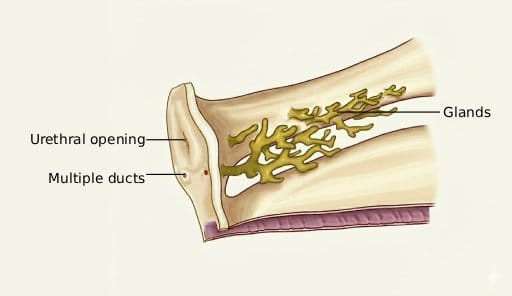
Anatomy of the Skene’s Glands: Precision and Location
Knowing the exact place of these small tubes requires a close look at the pelvic floor. Skene first noted that special ducts sit on either side of the lower part of the urethra.
However, modern studies show that there are actually more than two ducts. These complex branches reach deep into the layers around them and open into the urethra in several places. This spot puts them very close to the sensitive front vaginal wall.
The setup is very important for modern somatic bodywork. Since these ducts are hugged by nerve endings, they form a highly sensitive zone. A guide must touch this space with care to avoid pain and bring deep calm.
From Skene’s Glands to the Female Prostate
Modern science eventually caught up with his first smart findings. For over a hundred years, these parts carried his name, but their full impact remained highly debated.
Experts later began to test the exact chemical makeup of the tissue and its related fluids. They found striking links between these ducts and male body parts.
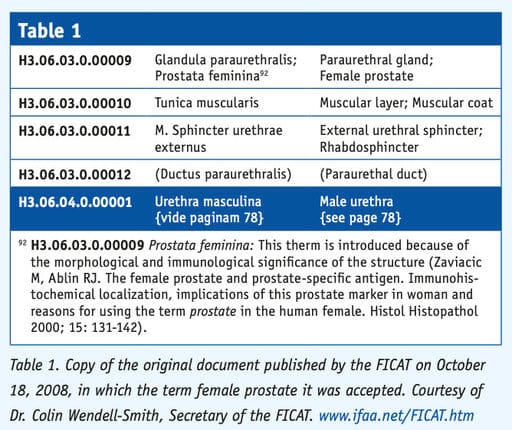
In 2001, the Federal International Committee on Anatomical Terminology officially stepped in to update the medical terms. They added the term “female prostate” into the standard medical books.
This official naming was based on the presence of matching chemical markers. You can learn more about the complex structure of the female prostate and how it functions as an active organ.
The Role of Skene’s Glands in Female Ejaculation
The early finding of these ducts directly links to the physical process of fluid release. For decades, women reported feeling distinct fluids during states of high arousal, which older doctors misread. We now know that the newly termed female prostate makes most of this unique fluid. The chemical mix of this output is entirely different from regular urine. It contains high levels of sugar and specific markers. Knowing the exact source of this fluid is vital for complete sexual health learning. If you want to explore the different types of fluids produced during arousal, you will find that science fully supports these natural biological actions.
Somatic Sensitivity and the Paraurethral Zone
The space around the urethral sponge is packed with sensory receptors and fine nerve endings. Touching this specific zone sends strong pleasure signals straight to the brain. During a yoni massage session, engaging this exact area needs a highly focused and mindful touch. Rushing the process or pressing too hard can cause the nerves to feel a threat, making the tissue shrink. This safety helps the pelvic floor muscles to relax and the gland network to swell naturally. Growing somatic feeling in this spot helps clear trapped tension and opens paths to deep physical release.
Common Misunderstandings and Medical Myths
Despite clear scientific agreement on the matter, many false ideas about pelvic parts persist in modern life. Many modern biology books still completely skip detailed notes about the complex duct network. This major learning gap leaves millions of women entirely unaware of their own inner forms. Another common myth is the wrong reading of natural gland fluids by poorly trained doctors. Care providers sometimes still mistake healthy fluid release for a bladder issue or bad infections. These wrong ideas often lead to needless medical steps and deeply rooted personal shame. Knowing the real facts of these organs is the vital first step toward true body reading.
The Importance of Skene’s Legacy in Modern Yoni Work
The long journey from complete unknown to formal medical praise shows the value of strong science. Knowing the true history of the Alexander Skene glands discovery holds great value for women living today. It honors their lived physical events and breaks down long years of given clinical shame. In the space of somatic learning, this key body knowledge builds a deeper bond between mind and tissue. Honoring this past breakthrough helps people explore their inner feeling maps with open wonder instead of fear. True healing always begins when we fully see the beautiful nature of our own physical design.